
I think it is important to address the elephant in the room here, something readers may be uncomfortable to acknowledge, so I would like to clear the air:
I am a crossbody guy.
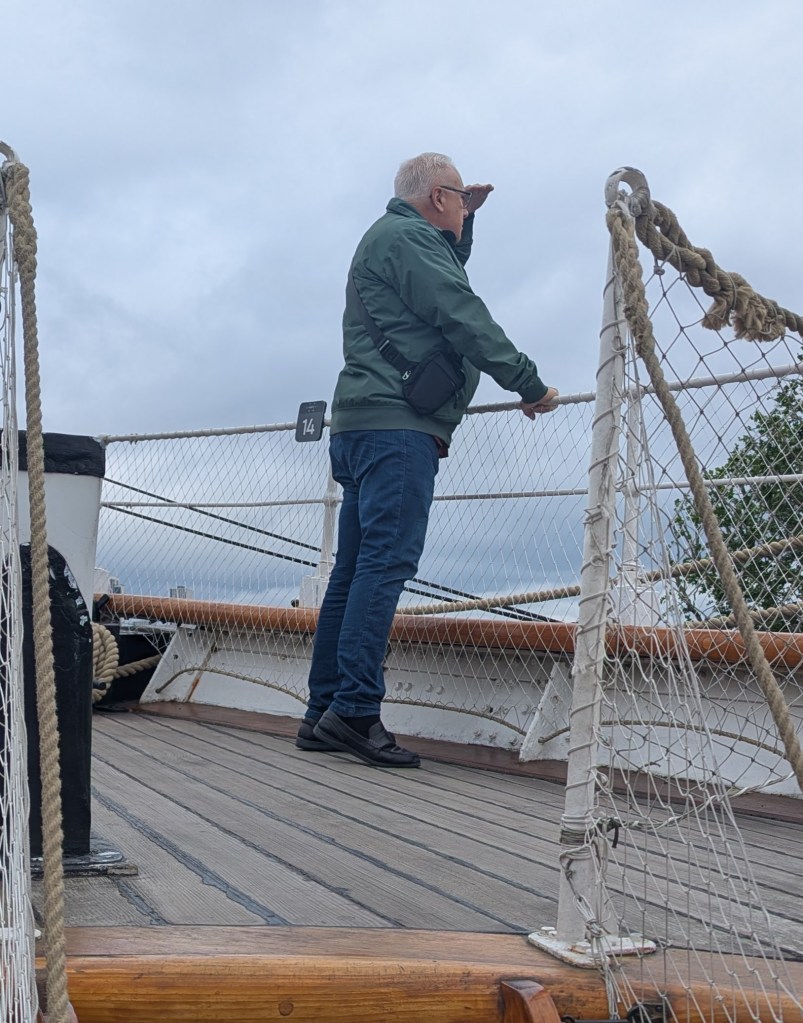
This little pouch I saw on the inter-web nearly a year ago is life-changing. I safely put my wallet, my phone, a pair of glasses (sun or otherwise) and any change I have collected in it. It is so light I forget I am wearing it, and my pockets remain empty and carefree. All traveling men should try it, they will not regret it.
There, I feel better already.
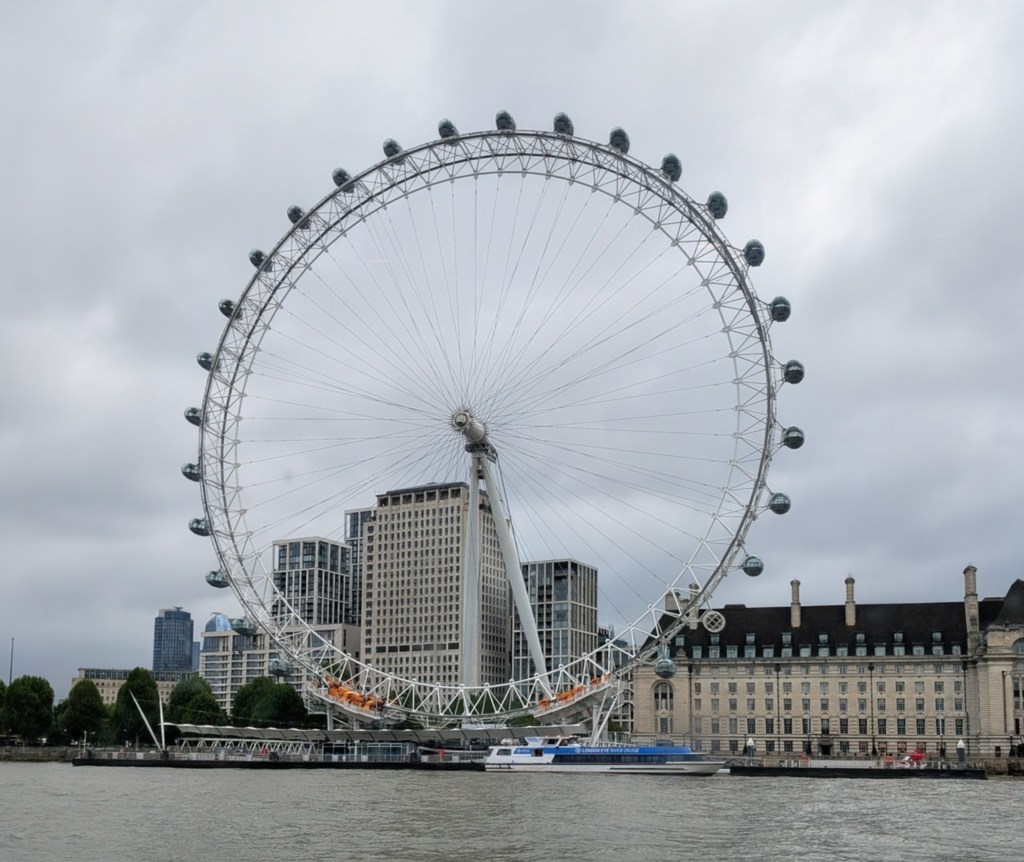
We changed things up today as we wanted to save our legs for later and hired an Uber to take us to the Battersea Power Station. We were going on a boat ride.
Uber has the franchise for the river taxi in London, and it works like clockwork. And just like for the buses and trains, you just tap your credit card or phone and you are done, no messy tickets required. (Just remember to tap out when the ride is over else the meter keeps running until it hits the max amount for one day.)
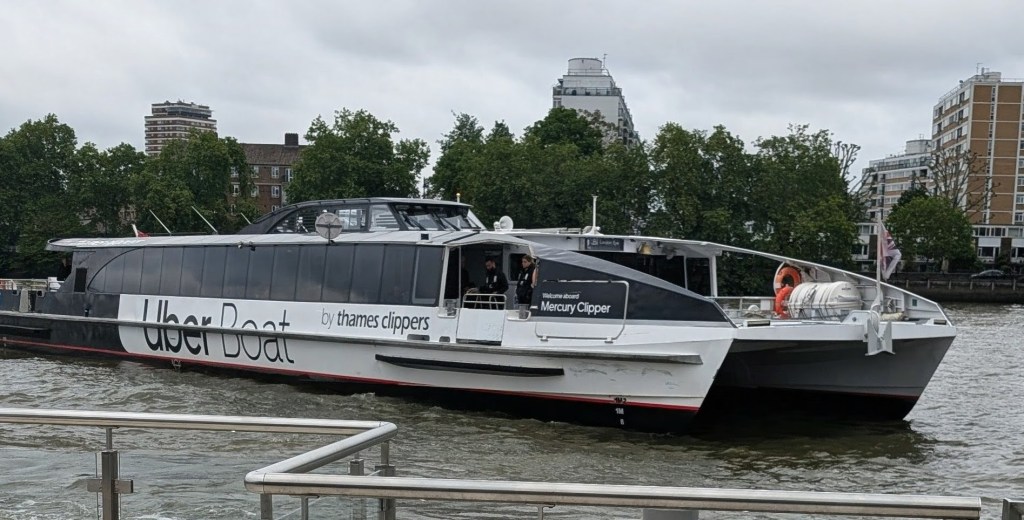
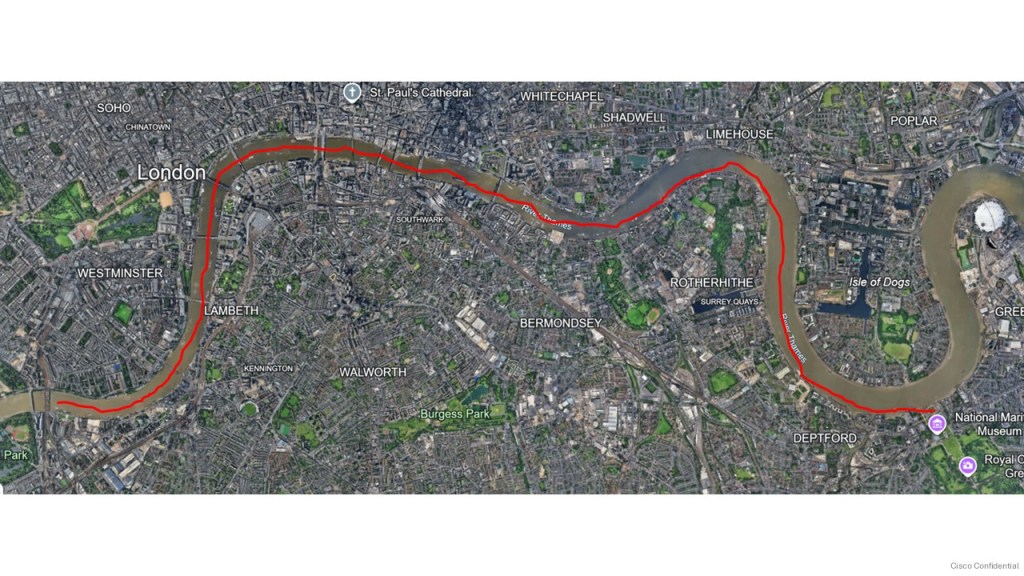
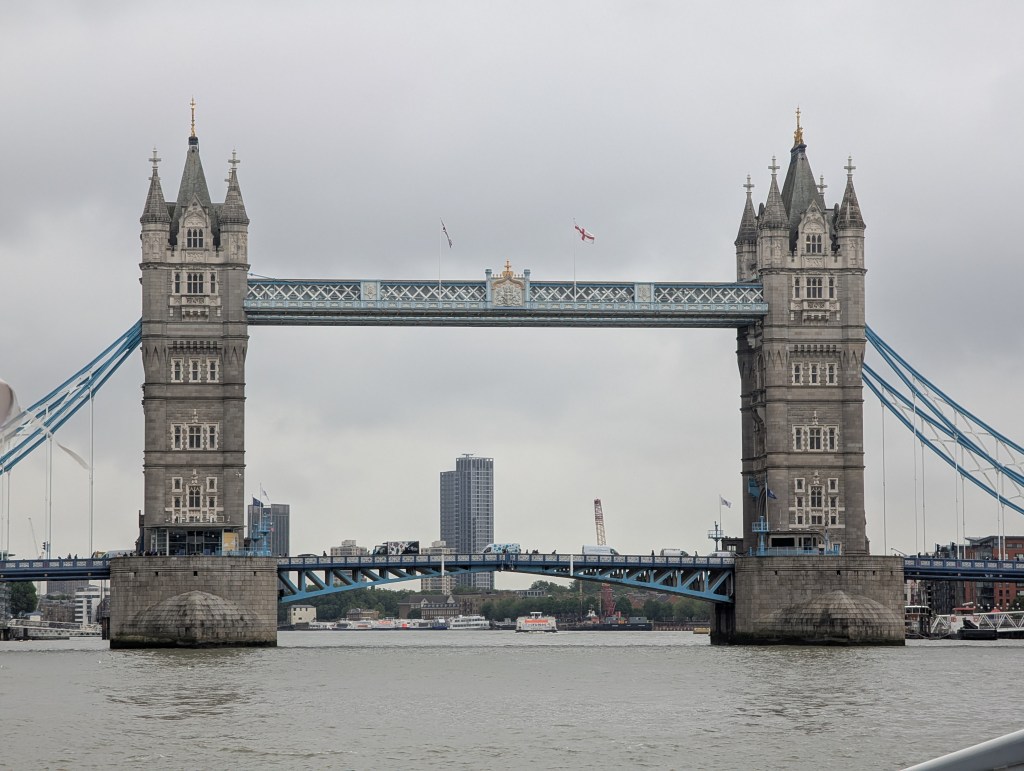
The ride is over 8 miles and with all the stops takes close to an hour, but it is a great, cheap way to tour the city from the Thames.
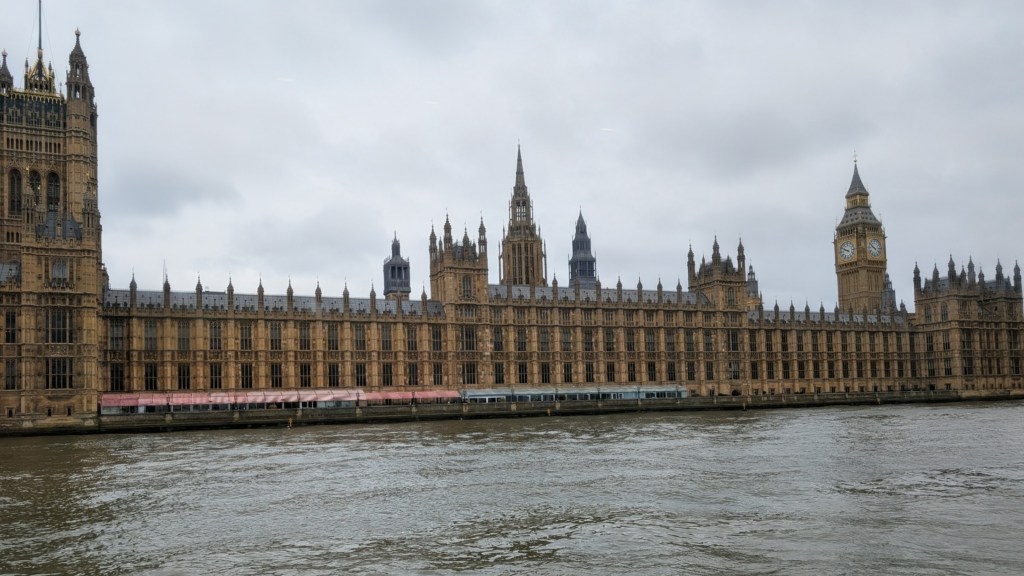
“And did I catch a ‘niner’ in there? Were you calling from a ‘walkie-talkie’?”
We got off at the Greenwich dock and right next to it was the famous clipper ship Cutty Sark in dry dock and on display.
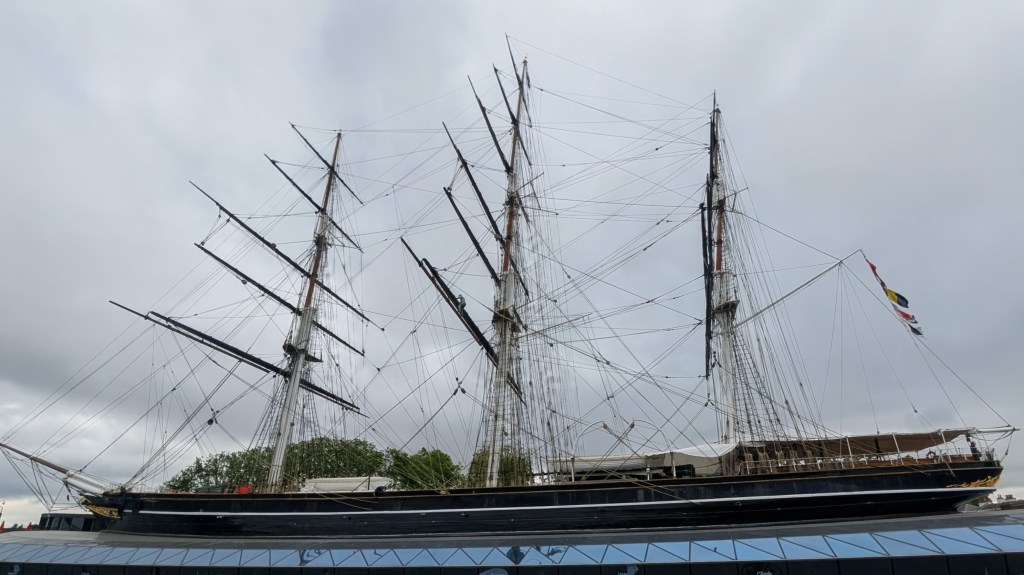
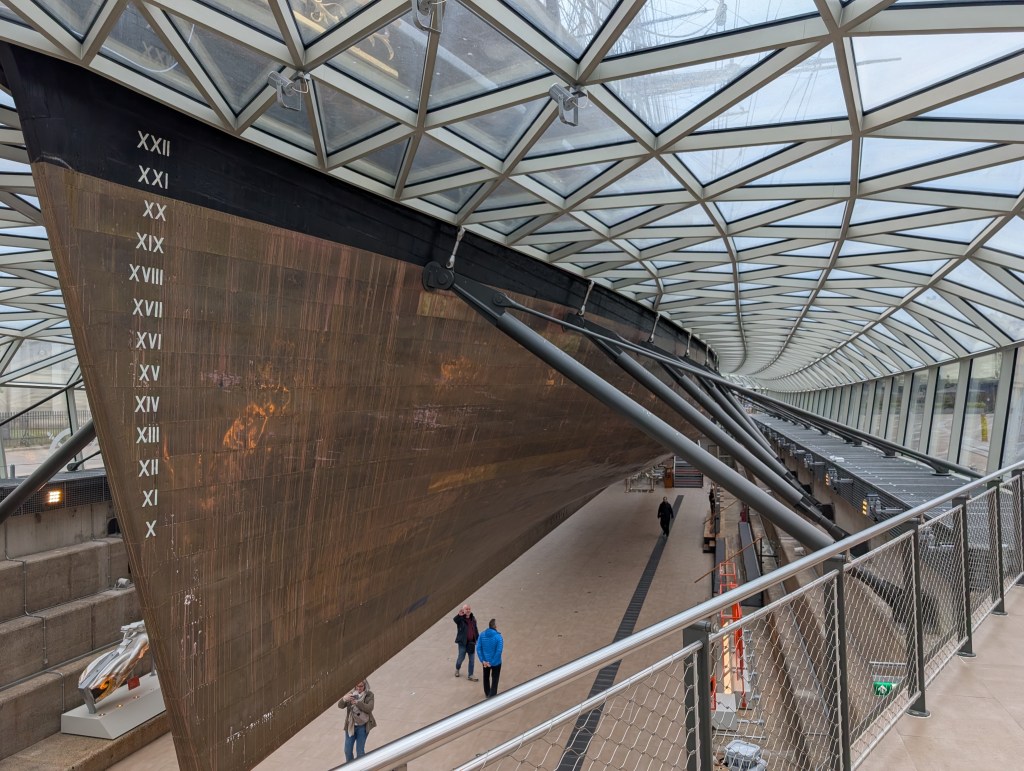
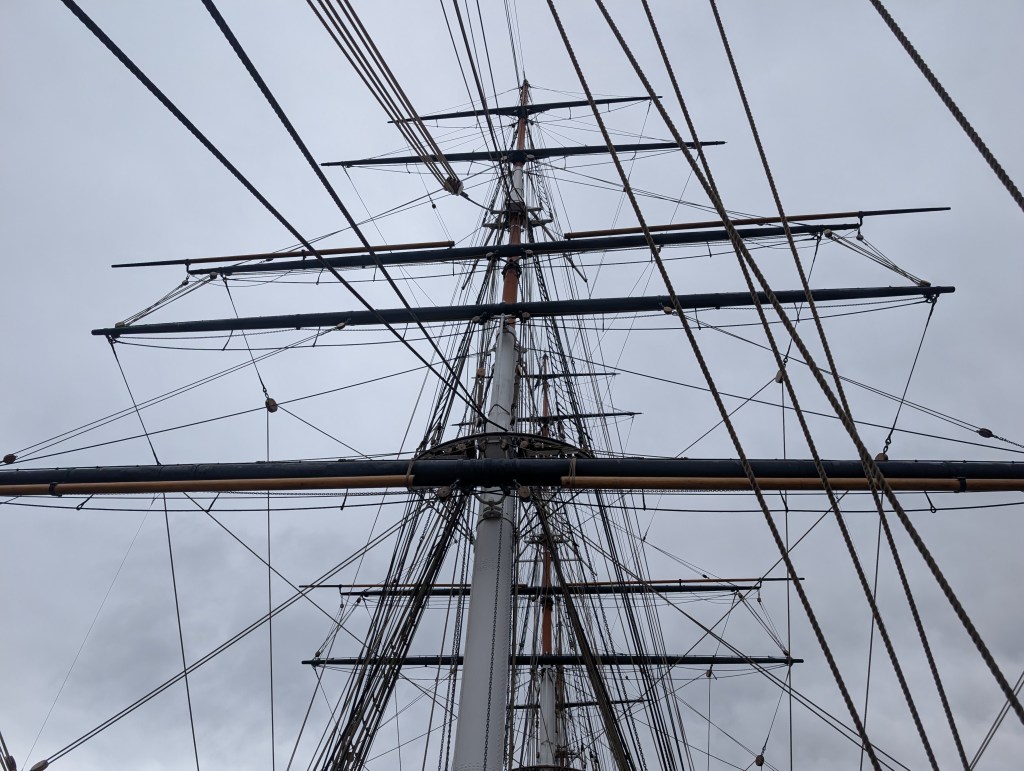
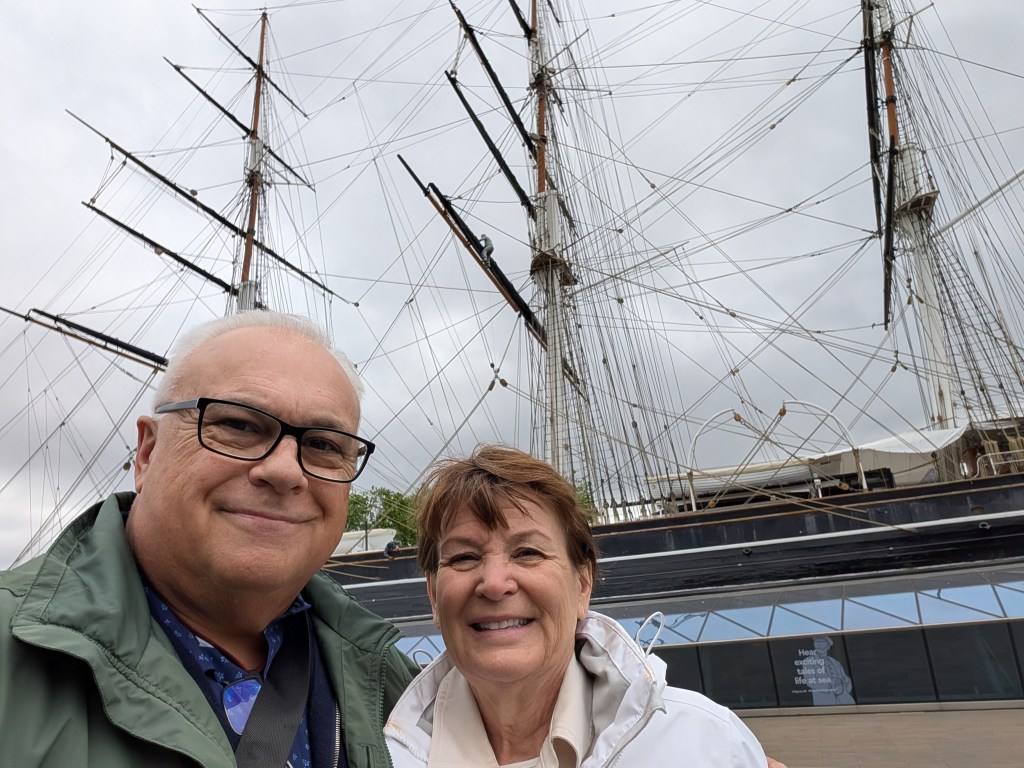
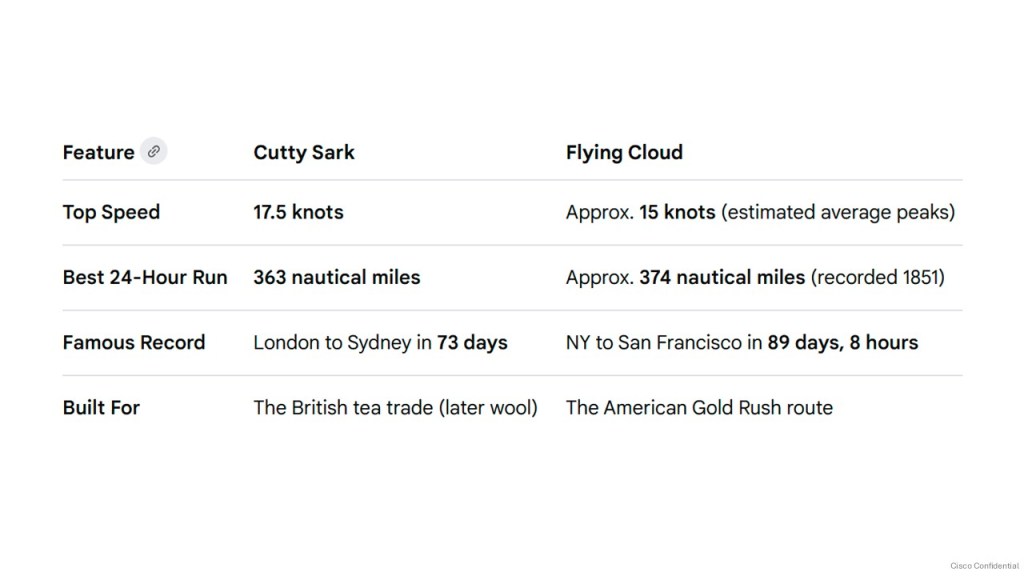
It is reputed to be the fastest clipper ship of its time. For most of its career it ran the tea route from China to England.
I don’t want to rain on anybody’s parade, but the US-built Flying Cloud was no slouch; it held the NY to San Francisco record for 135 years, not beaten until 1989!
No samples of the scotch by the same name were proffered.
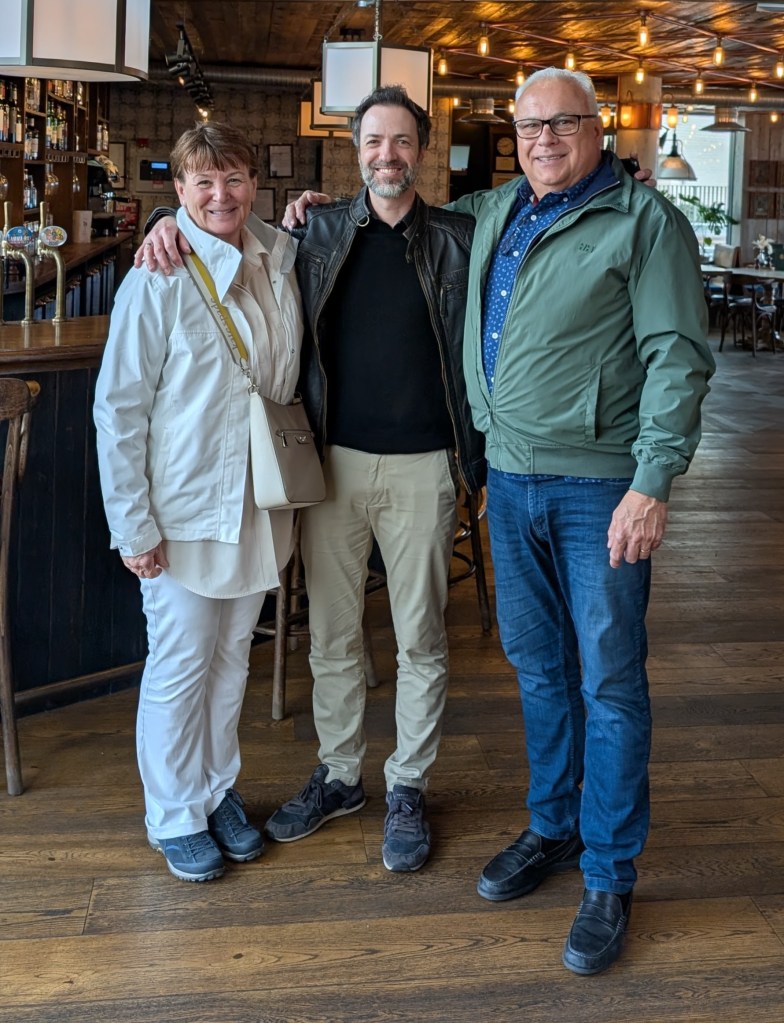
From there we had a short walk along the river bank to Enderby House, where we were meeting Sebastian for lunch.
Sebastian Chevenement is a customer I have been supporting for the last 8 years or so. His office is in Greenwich so it was too easy not to meet up.
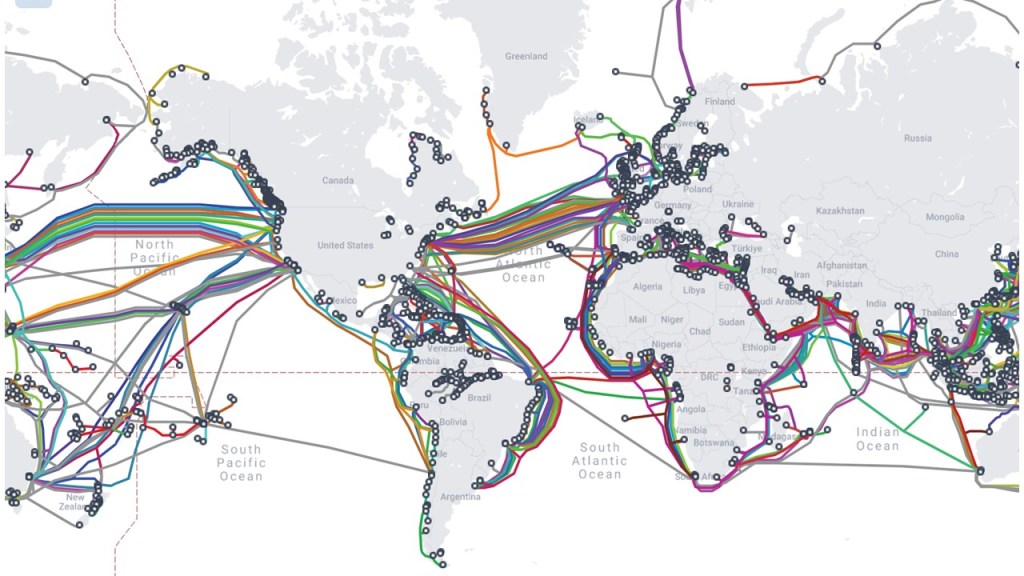
Seb’s company, Alcatel Submarine Networks, does exactly as its name implies. They build and lay the undersea telecommunication cables that connect the world. There are a lot of cables on the ocean floor.
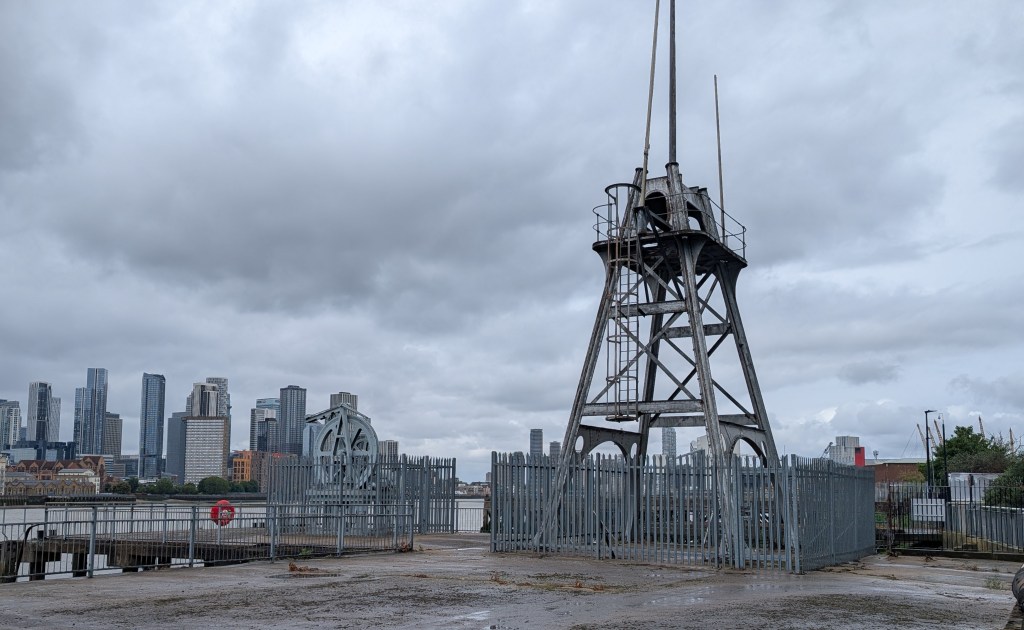
Seb explained that his company used to own all of the land in this area all the way down to the river – we passed by this tower – it was used to load the huge cables onto ships docked here.
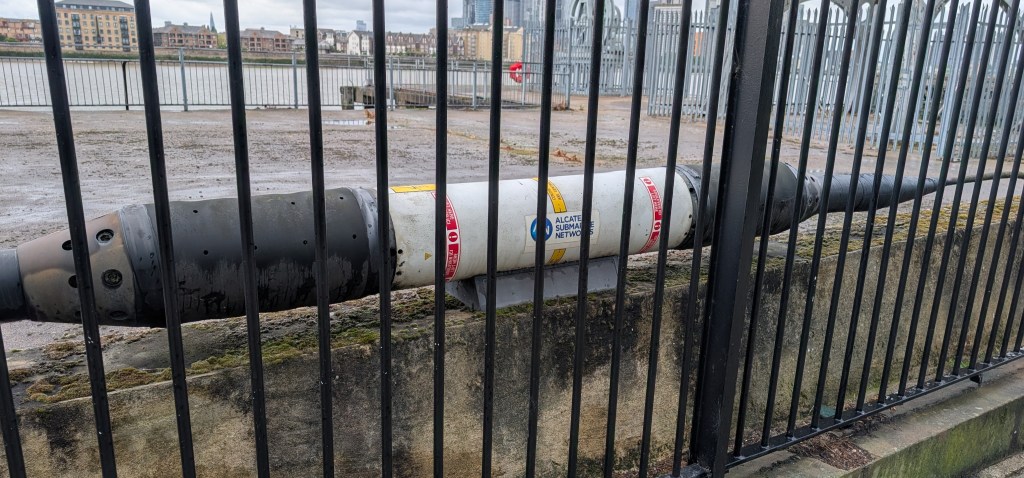
And here lies one of the repeaters that would help boost the communication signals over thousands of miles.
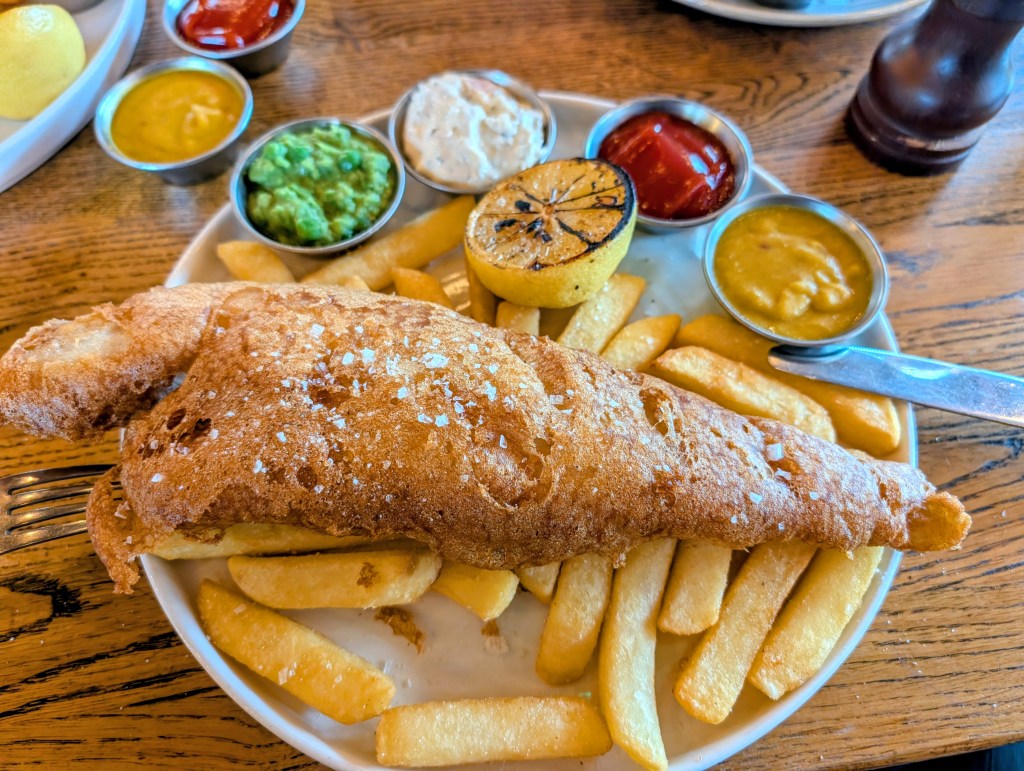
Finally, I had my first fish and chips, it did not disappoint
It was great seeing Seb!
From here we headed back to the Greenwich boat dock – but we didn’t take it – we had another means for getting back across the river.
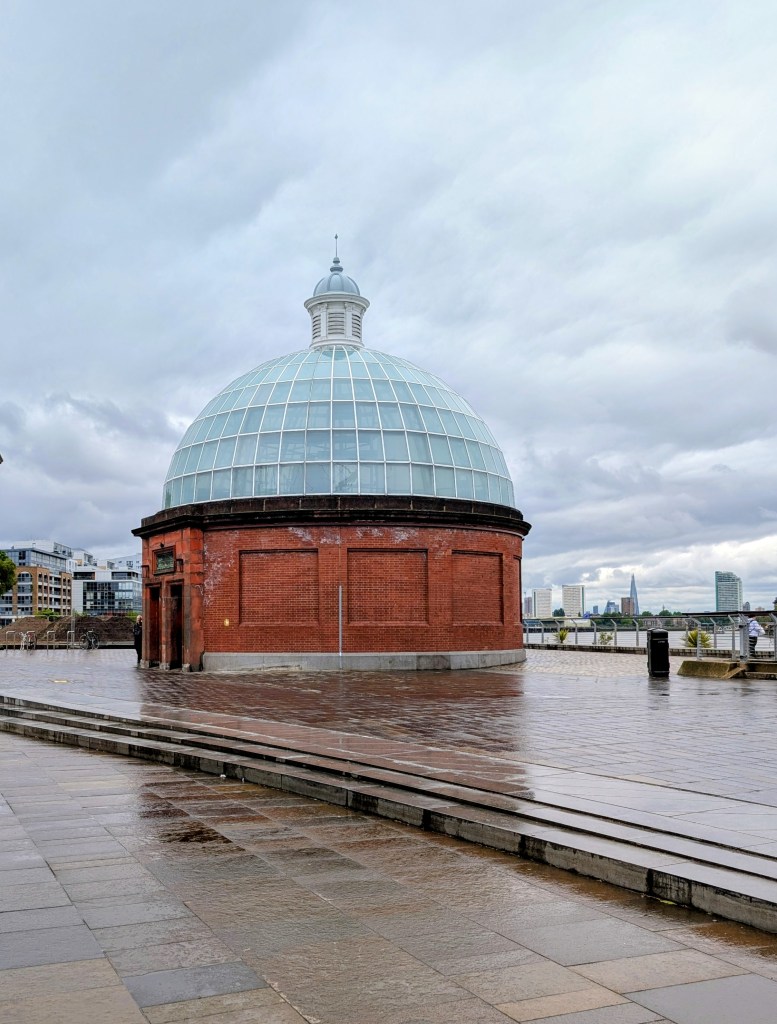
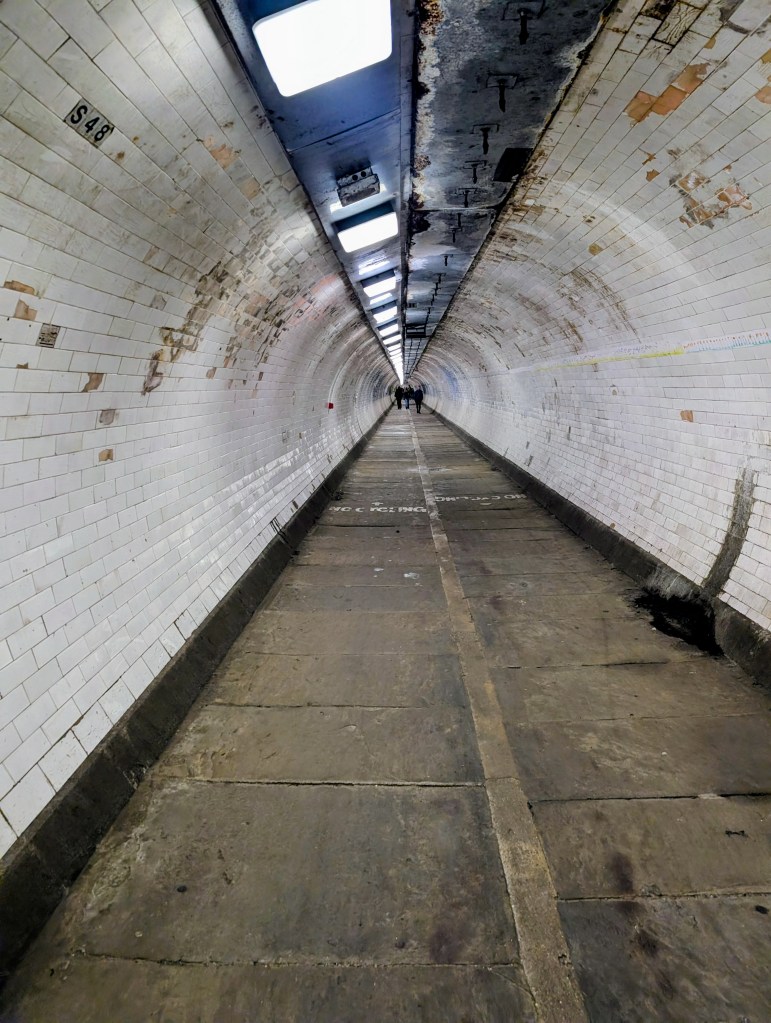
In 1902 the Greenwich Foot Tunnel was opened for pedestrians (the signs say no biking but that didn’t stop those jerks – Jim you and your biker pals can be a pain)
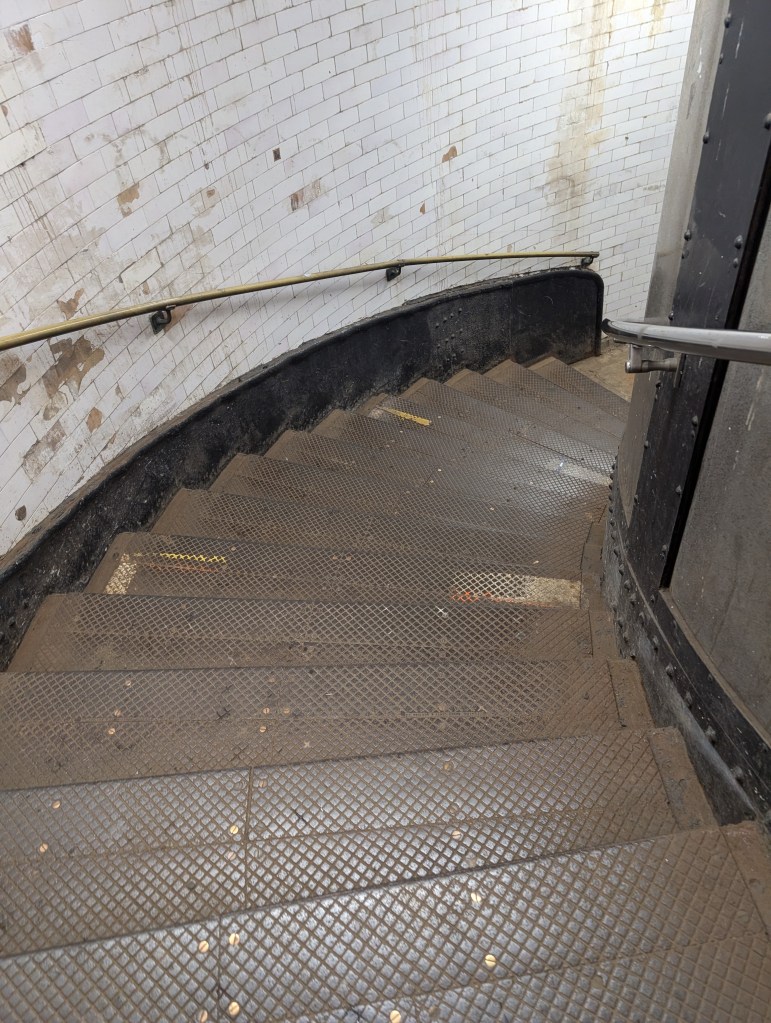
And since it is under the river, there are 81 steps to descend.
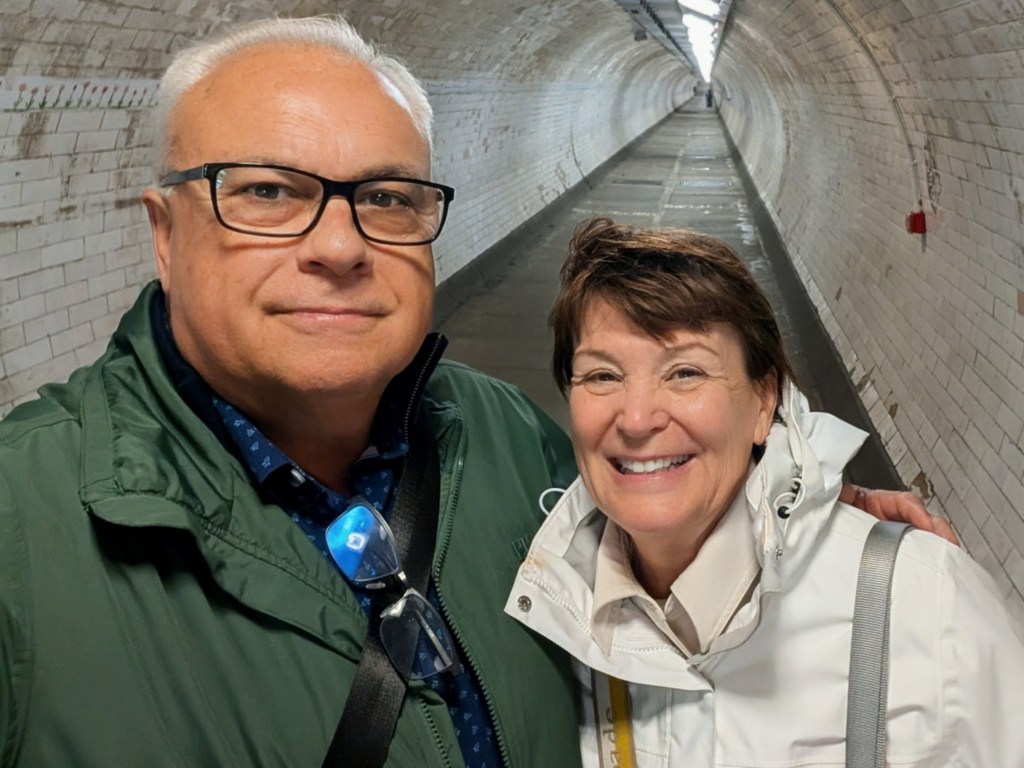
We popped out near a DLR station. The Docklands Light Railway is an automated, driverless light metro system in East and Southeast London. We rode it all they way back to “Bank” or the Bank of England station.
We walked a short distance to The Monument, also a name of a Tube station.
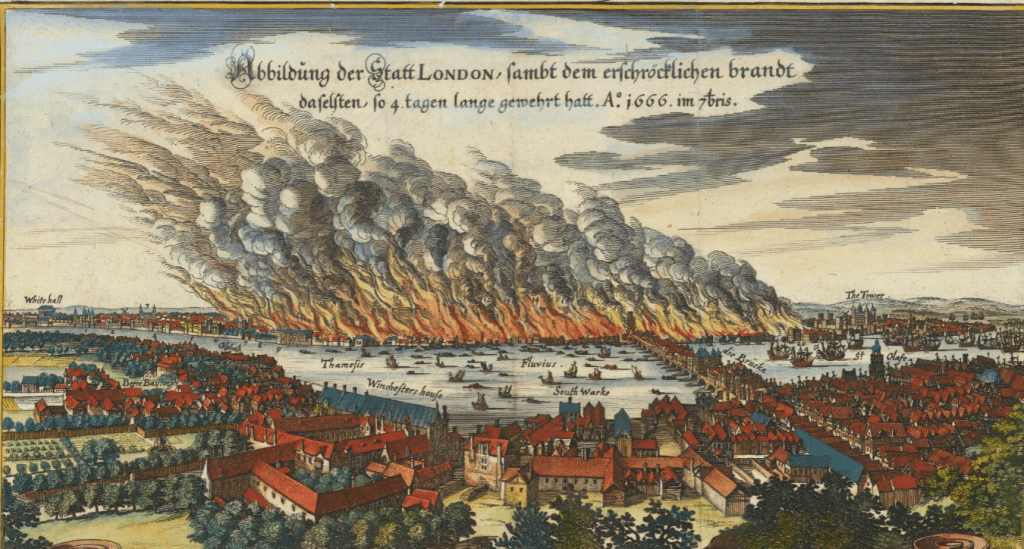
The Monument is London’s testament to the Great Fire of 1666.
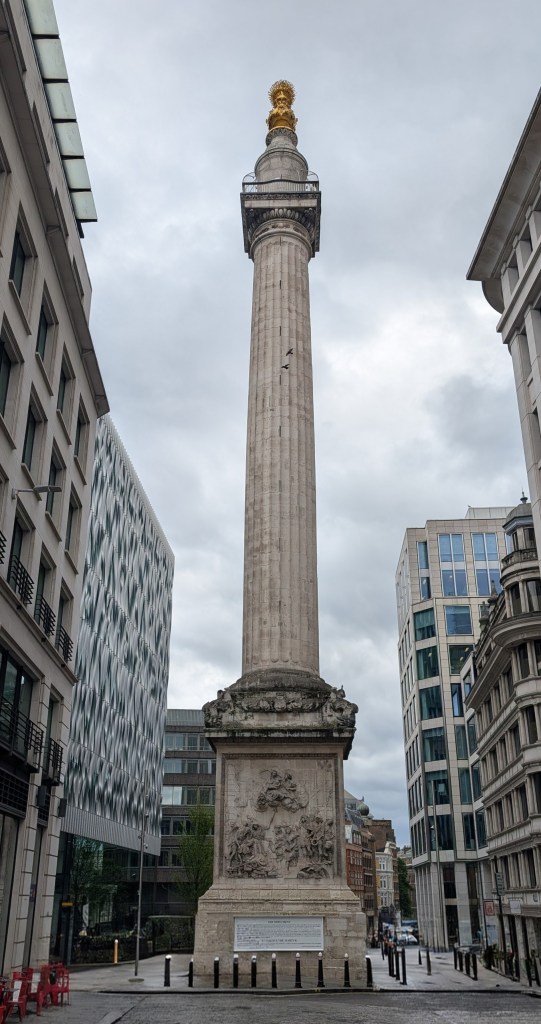
The column is 202 ft (61 m) high, the distance from the monument to the King’s bakery on Pudding Lane where the fire began.
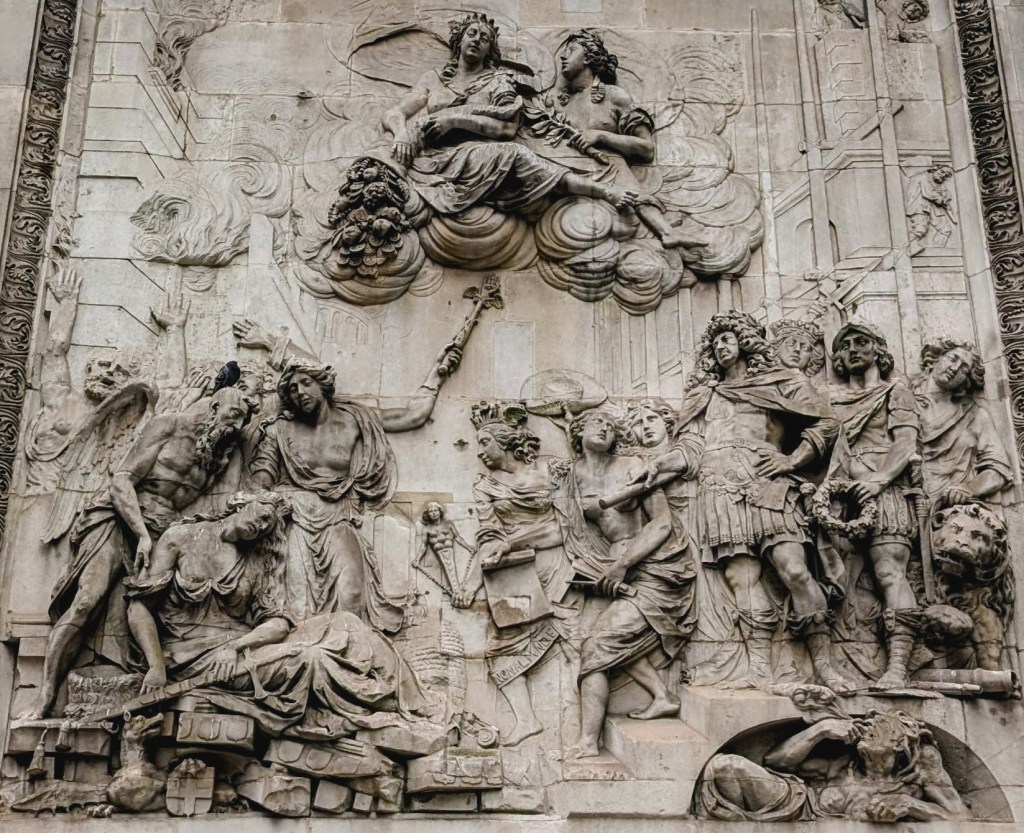
The relief on the base depicts downtrodden London in the lower left being saved by Charles II
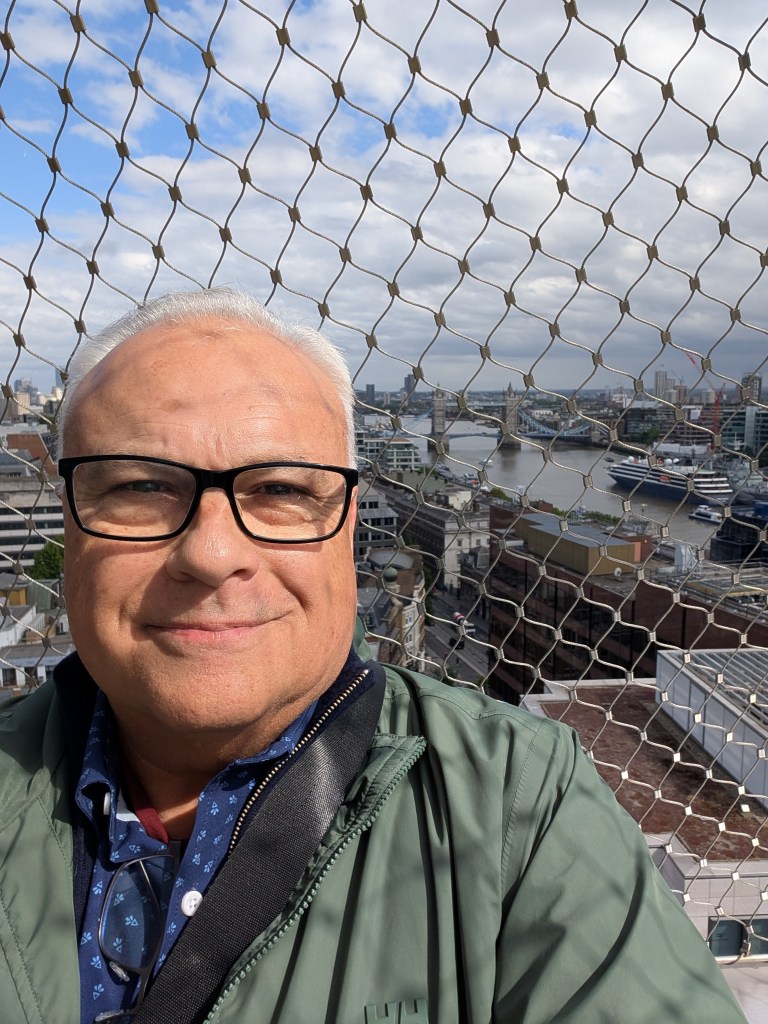
It is 311 steps to the top; Michele sat this one out and just as well, the clockwise spiraling steps had a dizzyingly effect, it was a good workout to the top.
Two-thirds of the city, 32,000 homes, 80 churches and countless businesses were lost. This print was published in Frankfort in 1670 by Matthäus Merian.
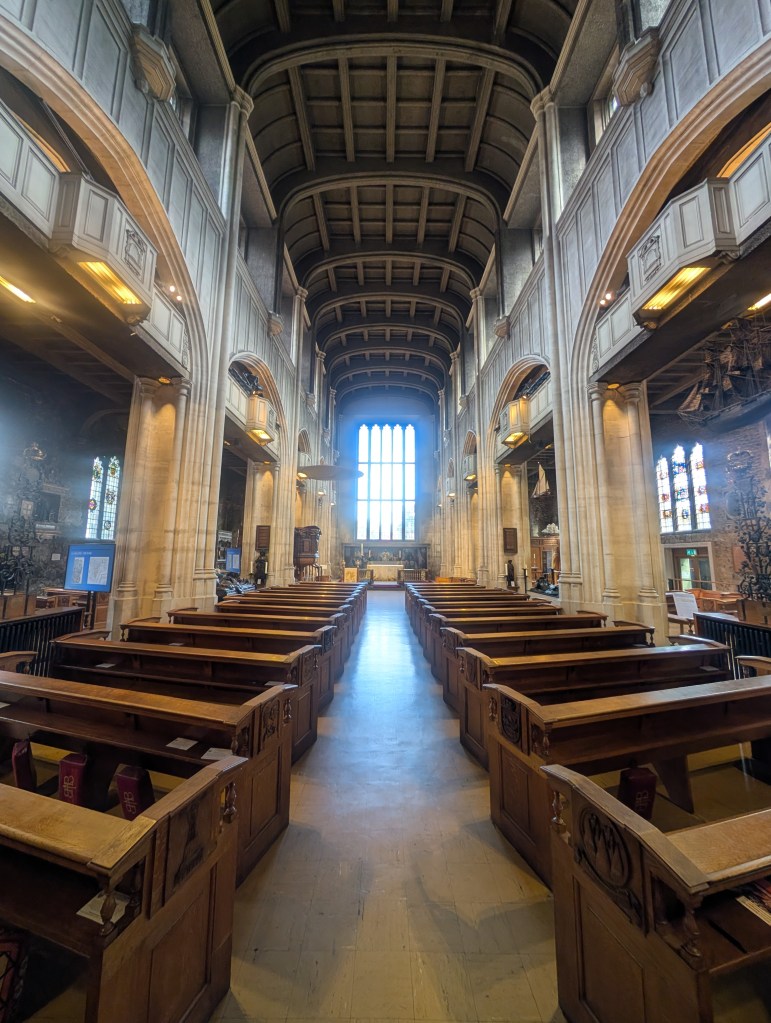
From here we walked a bit to All Hallows-by-the-Tower, reputed to be the oldest church in London, but there is some questions to this claim. It was founded in 675, so irregahdless, it is old.
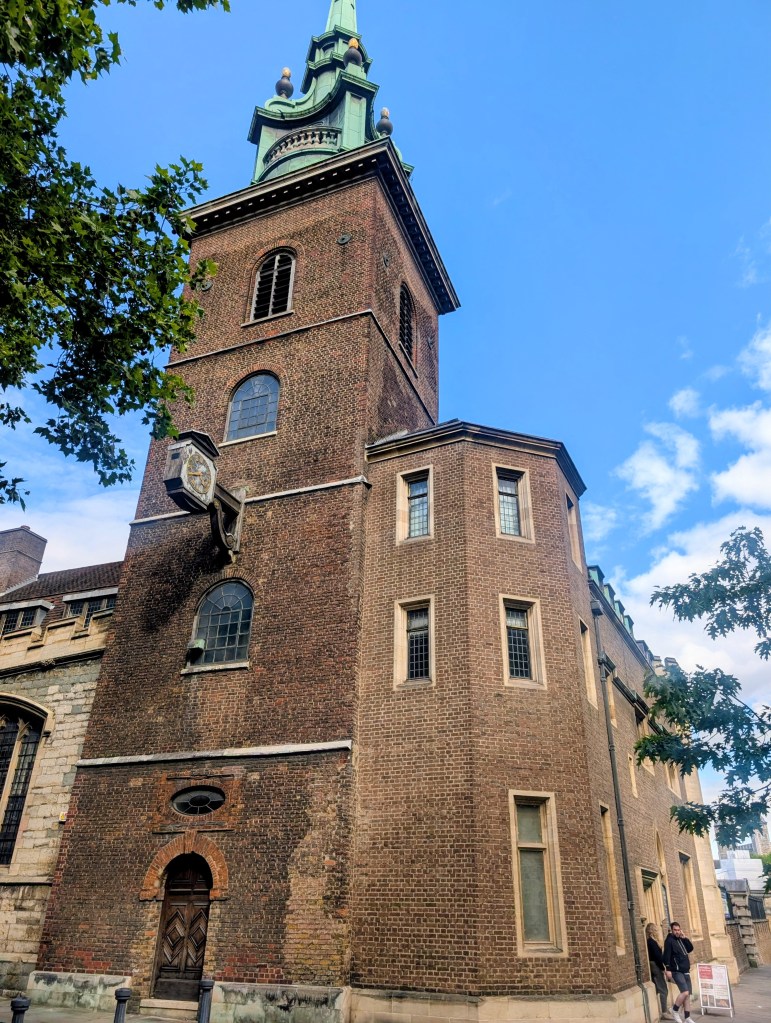
It survived The Fire, but it was heavily damaged during The Blitz.
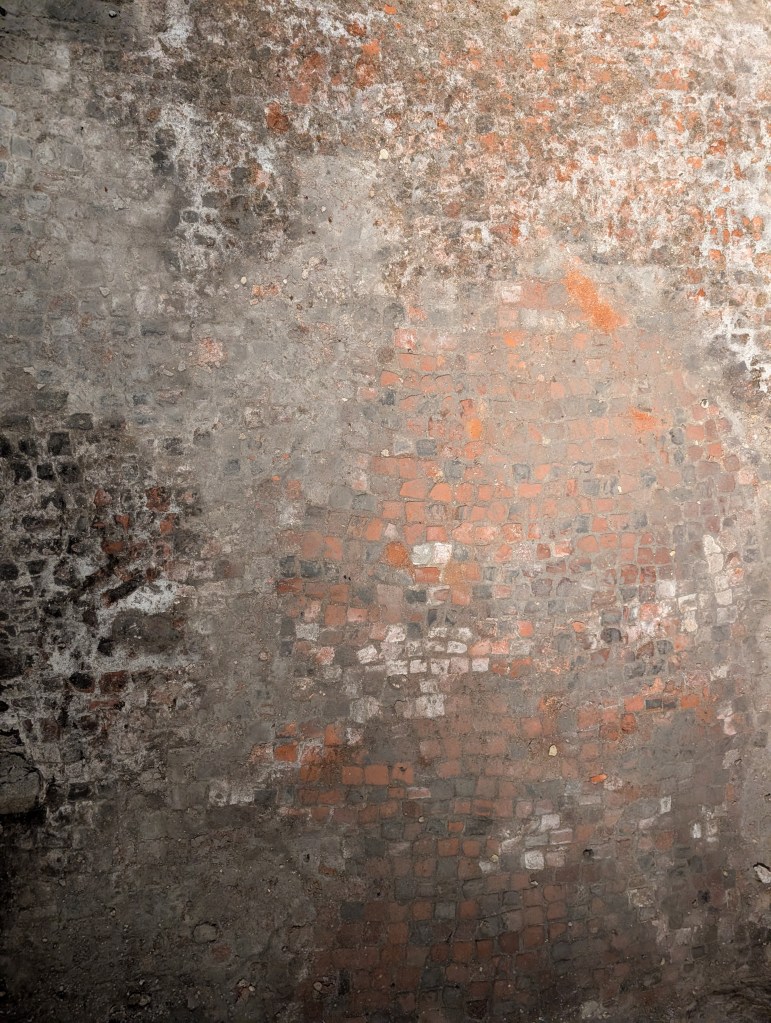
Below the church they found London’s best preserved 2nd Century Roman terracotta flooring. There was once a modest home here when London, called Londinium by the Romans, had a population of 60,000. The floor was discovered in the 1920s.
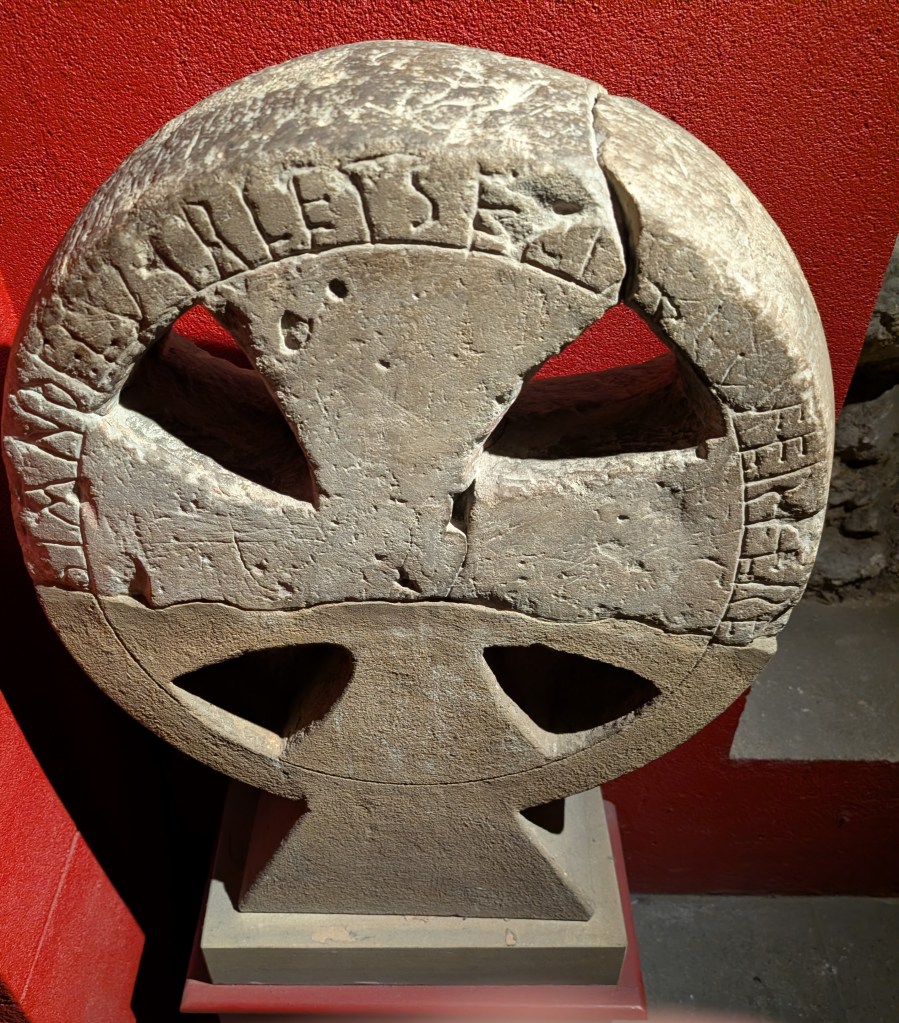
This wheel head cross was discovered in 1951 during reconstruction from the bombing. It is dated to 900AD and is Anglo-Saxon in origin. The odd inscription reads “Thelvar had this stone set up over here…” Don’t ask.
We then headed back to the Tube and walked back to the flat from Notting Hill Gate, wrapping up another great day of our London tour.
With love,
M&T


 A While Abroad
Leave a reply to BRENDA MUSKAVITCH Cancel reply